If you are a first‑ or second‑time campaign manager running a local or state race, your biggest operational risk probably isn’t your opponent’s ad budget—it’s your own spreadsheets. Research on get‑out‑the‑vote efforts shows that face‑to‑face contact can increase turnout by around 2–3 percentage points, but most campaigns lack the tools to plan, track, and learn from those interactions at scale. The myth is that “more volunteers and more calls” win close races; the reality is that without a real campaign manager stack, more activity just creates more chaos.[1][2]
Campaign manager tools are no longer “nice-to-have” software add‑ons; they are the hidden infrastructure that decides whether a modern campaign wastes its field, data, and volunteers—or turns them into a vote‑winning machine. This article walks through how the right stack changes outcomes, using real‑world case studies and research to show what’s possible when campaigns run on data instead of gut instinct.[3][4][5][6]
The quiet cost of “good enough” tools
Most campaigns still run on a patchwork of spreadsheets, generic CRMs, and chat threads that seem workable—right up until the race tightens and the field program needs to scale. The result is delayed decisions, duplicated outreach, and volunteers who feel disorganized and underused, all of which translate directly into lost votes in close races.[7][8][9][10]
Researchers have found that structured, face‑to‑face voter contact significantly boosts turnout compared with passive tactics, but only when campaigns can reliably plan, track, and follow up on those interactions. Without a real campaign manager toolset behind the scenes, even well‑intentioned field plans fail to show up in the actual numbers.[8][9][11][7]

What campaign manager tools really do for political campaigns
A true campaign manager tool functions like an operating system for the campaign: it connects voter data, field operations, digital outreach, volunteers, and fundraising into one coordinated, data‑driven workflow. Rather than each department building its own lists and reports, everyone works from a unified source of truth about voters, supporters, and volunteers.[4][6][12][3]
Modern political CRMs and campaign platforms integrate contact management, email, SMS, event tracking, donation history, and analytics so that every interaction—door knocks, phone calls, texts, and online actions—feeds a single, evolving profile of each voter or donor. That centralization is what enables smarter targeting, faster pivots, and more precise measurement of what is moving the numbers.[5][13][3][4]
Case study: A local campaign scales its field program
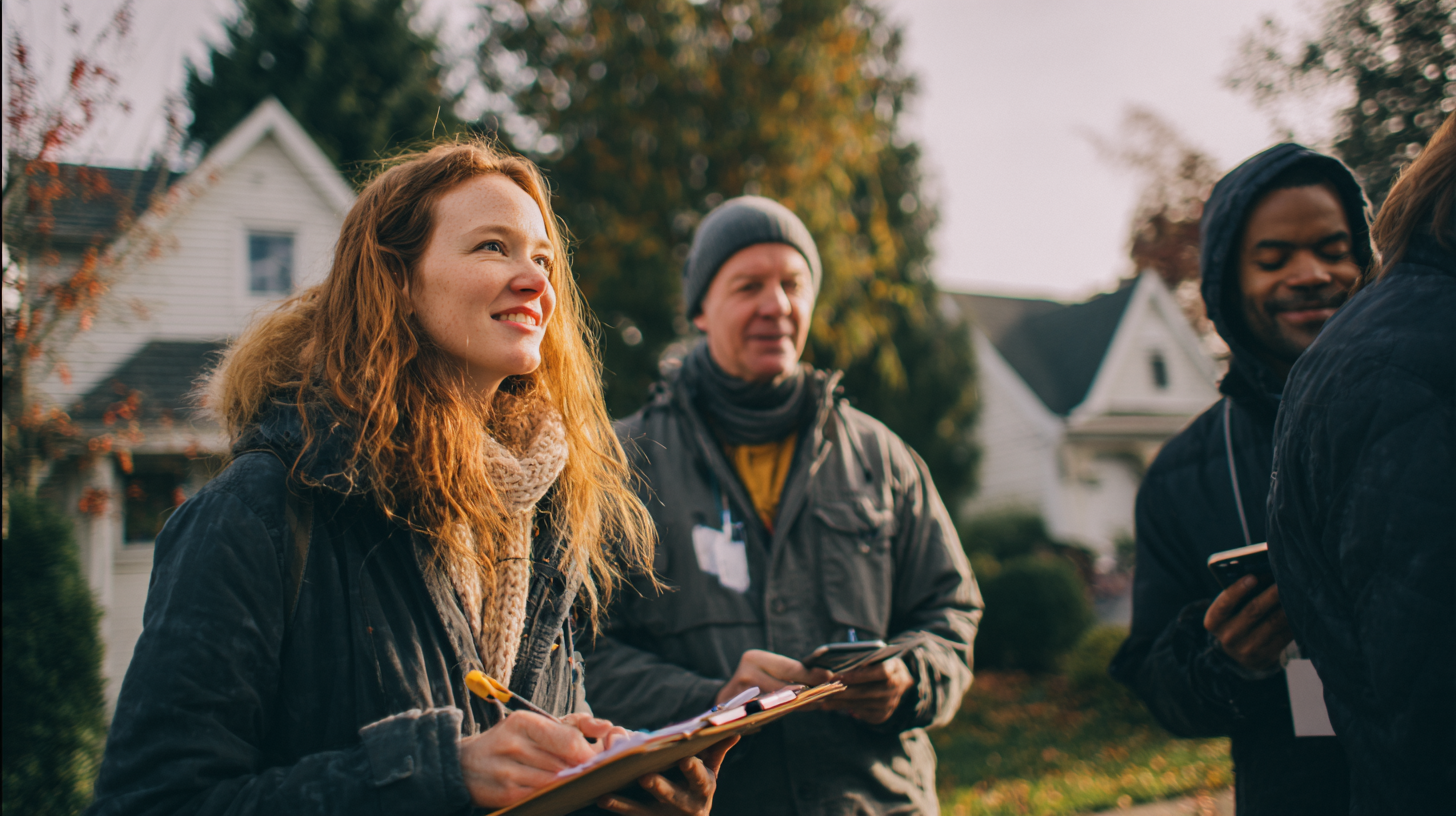
In one local election, a city council candidate in Ireland decided to replace ad‑hoc spreadsheets with a dedicated canvassing platform before the 2014 campaign. Using canvassing software to manage door‑to‑door outreach and volunteer data, the campaign built a structured feedback loop from the field: every doorstep conversation was logged, coded, and synced back into a central database.[14][3]
This shift allowed the campaign to:
- Identify priority areas and issues based on real voter responses rather than assumptions.[14]
- Allocate canvassers to neighborhoods where support was soft but winnable, instead of just “where people felt like going.”[5][14]
- Follow up with identified supporters and likely volunteers with targeted messages and invitations to events.[4][14]
The candidate went on to win the seat, and the campaign credited the canvassing tool with transforming volunteers from loosely coordinated supporters into a disciplined, data‑generating field organization. This is a small‑scale example of how even modest races benefit when field work is instrumented, measured, and managed like a serious operation.[10][3][14]
Voter data and targeting: from static lists to live strategy
Myth: A single master voter list is enough to run your field program. Reality: Meta‑analyses of campaign tactics show turnout shifts are small but real, so spreading resources evenly across that list wastes scarce doors and dials.[15][1]
Data‑driven campaigns treat the voter file as a living asset, continuously enriched by canvassing, phone banking, digital engagement, and external data sources. Instead of a single, static “universe,” they maintain multiple dynamic segments—persuasion targets, base voters, low‑propensity supporters, and undecided voters—each with tailored messages and tactics.[6][16][5]
A recent statewide campaign case study shows how this works in practice. A U.S. Senate campaign combined voter files, survey responses, demographic and behavioral data to score voters by persuasion potential and issue alignment. The campaign then:[5]
- Aimed healthcare‑focused messaging at suburban independents with high persuasion scores.[6][5]
- Deployed pro–Second Amendment and economic messages to rural voters identified as low‑turnout but ideologically aligned.[5]
- Directed field and phone resources toward the most responsive segments, rather than spreading efforts evenly.[6][5]
By focusing resources on the right voters with the right messages, the campaign improved cost‑per‑persuadable metrics and helped secure critical margins in key precincts. Data‑driven segmentation at this level is only feasible when a campaign’s tools can unify web, social, and field data into coherent voter profiles.[13][5]
Field and canvassing software: turning volunteers into a ground game
Myth: Any door‑knocking is good door‑knocking. Reality: Studies in Europe and the U.S. find that canvassing combined with targeted follow‑up can boost turnout by 2–3 percentage points or more, but only when campaigns know exactly who was contacted and what happened.[1][15]
Field programs are among the most effective ways to boost turnout and persuade voters when they are organized and tracked properly. Research shows that planned, in‑person voter contact has a measurable effect on participation, but campaigns must execute thousands of micro‑interactions consistently to see that impact.[9][11][8]
Canvassing apps such as Ecanvasser and similar platforms centralize walk list creation, route planning, scripts, and data capture so that each volunteer’s shift feeds directly into campaign strategy. These tools typically allow campaigns to:[12][3]
- Generate walk lists based on address, geography, or modeled scores.[17][3]
- Push tailored talking points and survey questions to canvassers’ phones, ensuring message discipline.[18][3]
- Track canvass progress and responses in real time, enabling mid‑week adjustments to turf or message.[3][14]
When a major political organization implemented a dedicated field management system built on ERPNext, they moved from fragmented regional operations to a single platform tracking volunteers, events, and voter contact across the country. This shift provided leadership with real‑time dashboards on turnout efforts and helped standardize field best practices across local teams.[19][12]
A large‑scale review of get‑out‑the‑vote experiments finds that personal door‑to‑door canvassing typically raises turnout by roughly 2–3 percentage points, with some contexts showing even larger gains when combined with tailored messaging.[2][1]

Volunteer and communication tools: making coordination effortless
Myth: The sign‑up form is the hardest part of volunteer recruitment. Reality: Digital organizing programs show that the real leverage is in how you route, support, and follow up with volunteers once they raise their hands.[20][21]
Volunteers are the lifeblood of most campaigns, but they can become a management burden without the right tools. Modern digital organizing suites and CRMs give campaigns a central hub to recruit, schedule, message, and retain volunteers at scale.[11][20][4]
Platforms like Impactive, Qomon, and other digital organizing tools have supported campaigns and advocacy groups in mobilizing thousands of volunteers via peer‑to‑peer texting, event coordination, and integrated reporting. Case studies show organizations using these tools to:[12][20]
- Move supporters from passive list members to active volunteers via targeted SMS and social outreach.[20]
- Run concurrent volunteer programs (phone banks, canvasses, relational outreach) with unified reporting and leaderboards to keep teams motivated.[12][20]
- Maintain consistent follow‑up with volunteers, reducing no‑shows and burnout by aligning shifts with people’s interests and availability.[11][20]
The League of Conservation Voters (LCV) used Impactive’s digital organizing suite to run its largest national member mobilization program ahead of the 2022 elections. Using peer‑to‑peer texting and phone banking from one platform, LCV reached more than 64,000 members, sent over 200,000 texts, and increased volunteer shifts by about 40 percent compared with 2020. For one “day of action,” they filled 2,000 volunteer shifts in just a couple of days—an outcome that would have been nearly impossible to coordinate with spreadsheets alone.[22][23]
For local campaigns with a single staffer and a rotating cast of volunteers, this might be as simple as one digital organizing tool handling sign‑ups, texting, and shift tracking in one place.[23][20]
A strong volunteer management layer means organizers can spend their time coaching and supporting people instead of hunting through email chains and spreadsheets.[4][20]
Political CRM: fundraising, compliance, and donor management
On the finance side, political CRMs tie individual donor histories, online contributions, events, and compliance obligations into a single system. This allows campaigns to run more effective call time, segment appeals, and generate required reports without endless manual reconciliation.[24][3][4]
For example, political CRMs like CrmOne integrate with fundraising platforms, websites, and phone banking tools so campaigns can:
- Track every donor’s giving history and interactions in one record.[4]
- Automate email sequences and reminders based on giving behavior or event attendance.[25][4]
- Generate analytics and summaries that help finance directors focus on the highest‑value prospects and lapsed donors.[6][4]
In practice, that means fewer errors, better compliance, and more time spent making meaningful asks instead of cleaning spreadsheets.[13][4]

Analytics and forecasting: seeing the race in real time
Analytics and modeling layers sit on top of the core campaign stack, turning raw contact data into insight about vote goals, persuasion progress, and resource allocation. Subscriptions like Civis Political and similar modeling services blend voter files with survey and behavioral data to forecast likely outcomes and highlight leverage points.[3][5]
These tools can:
- Show which precincts and segments are over‑ or under‑contacted relative to goals.[3][5]
- Measure how different messages perform across voter segments and channels.[5][6]
- Support “what‑if” scenarios for turnout, allowing campaigns to test how shifting resources might change expected margins.[13][5]
Youth‑focused group Voters of Tomorrow used a central digital organizing platform to coordinate high‑volume texting and student‑led outreach across battleground states in 2022 and 2024, demonstrating how a small distributed team can execute national‑scale programs when the stack matches their ambition. A data‑driven digital voter‑registration case study similarly highlighted how continuous optimization, grounded in analytics, helped a campaign reach the right audiences and increase registrations efficiently.[26][25][20][6]
Choosing and implementing the right stack
Not every campaign needs an enterprise‑grade, nationwide infrastructure, but every serious campaign benefits from a deliberate, scaled‑to‑fit stack. Smaller local races might combine a focused CRM, a canvassing app, and a simple analytics layer, while statewide or federal campaigns typically add modeling, automation, and bespoke data integrations.[19][3][4]
If you’re a local candidate or first‑time manager, start with a lean stack: one political CRM, one canvassing app that syncs to it, and one simple texting or email tool. Keep everything else in service of those three pieces. If you’re a state director or consulting firm running multiple races, add modeling, analytics, and a digital organizing suite so you can compare performance across districts and rapidly move resources.[^27][20][3][4][5]
The most successful implementations follow a staged approach:
- Establish a central CRM and voter data foundation.[4][5]
- Add field and canvassing tools that sync directly into that core.[14][3]
- Layer on volunteer communication and digital organizing tools to scale people‑power.[20][12]
- Introduce analytics and modeling once reliable, consistent data is flowing in.[3][5]

FAQ: Campaign manager tools
Do small local campaigns really need a political CRM? Even at the school board or city‑council level, a basic CRM prevents lost contacts, duplicates, and missed follow‑ups; it also keeps your donor and volunteer history usable for future cycles.[^27][4]
What’s the minimum campaign tech stack I should start with? For most local races: one political CRM, one canvassing app, and one digital outreach tool (email or texting) form a solid “minimum viable stack.” Analytics and modeling can be layered later as your list and budget grow.[^27][3][4][5]
Take control: a one‑week campaign stack reset
In the next week, you can start redesigning your campaign around a real tool stack without buying everything at once:
- List every tool, spreadsheet, and ad‑hoc process you use to track voters, donors, and volunteers.
- Circle any place where data is re‑typed or copied between tools—that’s where you are bleeding time and accuracy.
- Choose one political CRM and one canvassing or digital organizing tool that integrate cleanly and commit to moving all new data there.[^28][4]
- Set a simple weekly habit: review one dashboard or report that tells you how many voters you actually reached, not just how many calls you made.[^28][^27]
Campaigns that make these small, early decisions about their stack are the ones that can turn the same number of volunteers, calls, and doors into more votes—because they are finally managing the campaign, not just surviving it.[15][1]
References
- https://www.cambridge.org/core/journals/political-science-research-and-methods/article/is-it-worth-doorknocking-evidence-from-a-united-kingdombased-get-out-the-vote-gotv-field-experiment-on-the-effect-of-party-leaflets-and-canvass-visits-on-voter-turnout/757F1AF7D16F43A444BDDE55181471B5 ↩ ↩2 ↩3 ↩4 ↩5
- https://isps.yale.edu/research/field-experiments-initiative/lessons-from-gotv-experiments ↩ ↩2
- https://callhub.io/blog/political-campaign/political-campaign-tools/ ↩ ↩2 ↩3 ↩4 ↩5 ↩6 ↩7 ↩8 ↩9 ↩10 ↩11 ↩12 ↩13 ↩14 ↩15 ↩16 ↩17
- https://www.crmone.com/political-crm ↩ ↩2 ↩3 ↩4 ↩5 ↩6 ↩7 ↩8 ↩9 ↩10 ↩11 ↩12 ↩13 ↩14 ↩15 ↩16 ↩17
- https://propellant.media/data-driven-voter-segmentation-using-behavioral-and-demographic-data-for-precise-political-targeting/ ↩ ↩2 ↩3 ↩4 ↩5 ↩6 ↩7 ↩8 ↩9 ↩10 ↩11 ↩12 ↩13 ↩14 ↩15 ↩16 ↩17
- https://marketing.sfgate.com/blog/microtargeting-and-data-analytics-transforming-political-campaigns ↩ ↩2 ↩3 ↩4 ↩5 ↩6 ↩7 ↩8
- https://www.hks.harvard.edu/sites/default/files/degree programs/MPP/files/Scaling the Field Organization in Modern Political Campaigns_Final.pdf ↩ ↩2
- https://www.iaff.org/wp-content/uploads/Political-Field-and-Canvassing.pdf ↩ ↩2 ↩3
- https://isps.yale.edu/sites/default/files/publication/2012/12/ISPS00-001.pdf ↩ ↩2 ↩3
- https://circle.tufts.edu/sites/default/files/2019-12/WP26_CivicEngagementandtheCanvass_2005.pdf ↩ ↩2
- https://sisterdistrict.com/library/field/canvass-training-guide/ ↩ ↩2 ↩3 ↩4
- https://qomon.com/case-study/political-campaign-software ↩ ↩2 ↩3 ↩4 ↩5 ↩6
- https://policyreview.info/articles/analysis/data-driven-political-campaigns-practice-understanding-and-regulating-diverse-data ↩ ↩2 ↩3 ↩4
- https://www.ecanvasser.com/blog/case-study-data-analysis-from-canvassing ↩ ↩2 ↩3 ↩4 ↩5 ↩6 ↩7
- https://policyreview.info/pdf/policyreview-2017-4-775.pdf ↩ ↩2 ↩3
- https://www.eff.org/deeplinks/2024/04/how-political-campaigns-use-your-data-target-you ↩
- https://qomon.com/case-study/canvassing-app ↩
- https://www.ngpvan.com/blog/canvassing-script-example/ ↩
- https://midocean.tech/case-study-streamlining-election-campaign-management-with-erpnext/ ↩ ↩2
- https://www.impactive.io/case-studies ↩ ↩2 ↩3 ↩4 ↩5 ↩6 ↩7 ↩8 ↩9 ↩10 ↩11
- https://theconnector.substack.com/p/digital-organizing-as-if-volunteers ↩
- https://www.impactive.io/case-studies/league-of-conservation-voters ↩
- https://www.impactive.io/lp/digital-organizing ↩ ↩2
- https://www.aristotle.com/campaigns/ ↩
- https://www.forbes.com/councils/forbesbusinesscouncil/2025/04/03/a-data-driven-digital-strategy-a-case-study-from-voter-registration/ ↩ ↩2
- https://www.impactive.io/case-studies/voters-of-tomorrow ↩